Megh / মেঘ

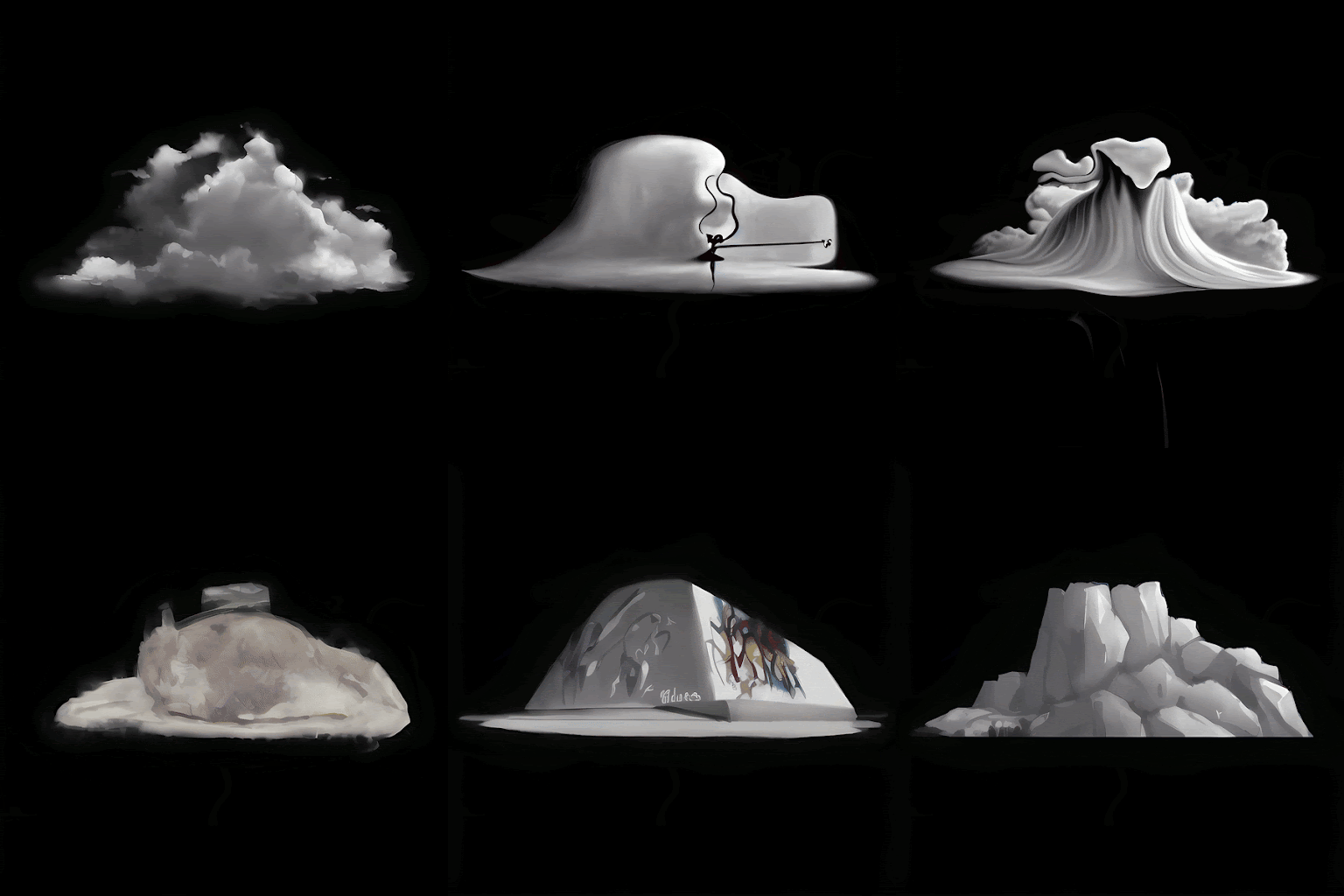
Megh (“cloud” in Bengali) explores the nature of fleeting memory and the conditions that trigger it. The project asks how imagery can resurface fleeting recollections, summon nostalgia, or open emotional threads for viewers to grasp. Using the cloud as a vessel, Megh builds an atmosphere where memories emerge not through narrative but through suggestion, form, and abstraction.
Background & Context
The first seed of Megh appeared in 2017, when I superimposed a Dhaka cloud onto a Texas sky (image to the right). The difference of Dhaka’s muted, polluted atmosphere to the expansive clarity of Texas’s skies would leave me unsettled, invoking my post-migration fractured sense of place. That early gesture revealed the cloud’s potential as a carrier of memory: always present yet ungraspable.
As my practice and new tools evolved, Megh became a way to extend this impulse.

Megh detaches from photography entirely to ask broader questions about fleeting senses.


It builds waypoints to investigate what triggers recollection and how images can provoke association.
Spawning what Brian Massumi, in Parables for the Virtual (2002), calls a “zone of indeterminacy” : a space where sensation precedes fixed meaning. Each synthetic expression of the megh operates in a pre-linguistic register, provoking responses before they can be named or narrated.
Does any of my meghs remind you of a memory?
Megh has no singular meaning


Each megh is up for diverse, valid interpretations. It operates within the paradoxical parameters of unknown familiarities.
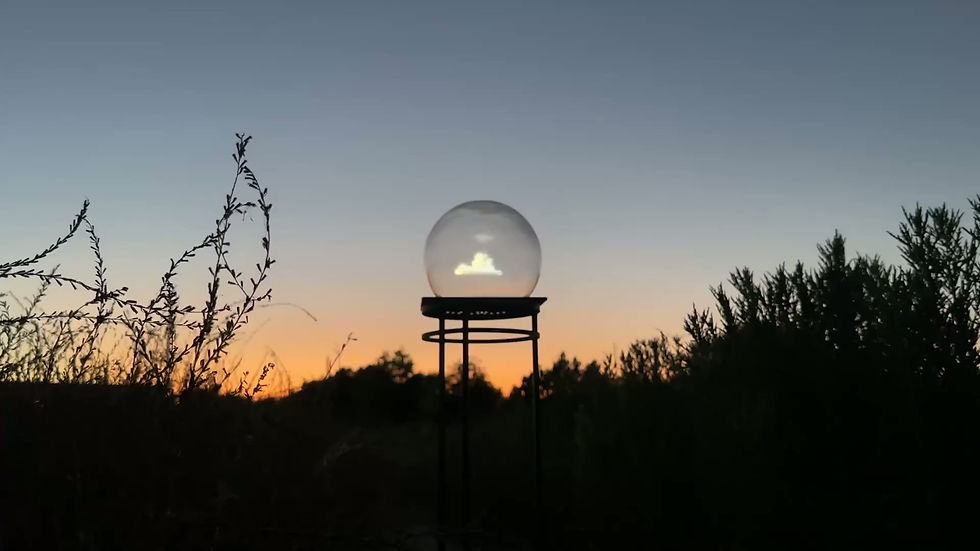
Installation : Megh as a synthetic moving object
Megh was also explored as a sculpture/installation. It features a 300-frame rotating animated sequence of the generated clouds. The animation is set on a nonlinear timeline in a pepper's ghost, where the rotation has fractured into a glitching, stuttering loop.


Showcase : Opening Megh to the public.
From the set of 3000, I curated 160 images to be shown in a gallery. I printed each Megh as 8x8 inch archival inkjet prints and arranged into a grid pattern.
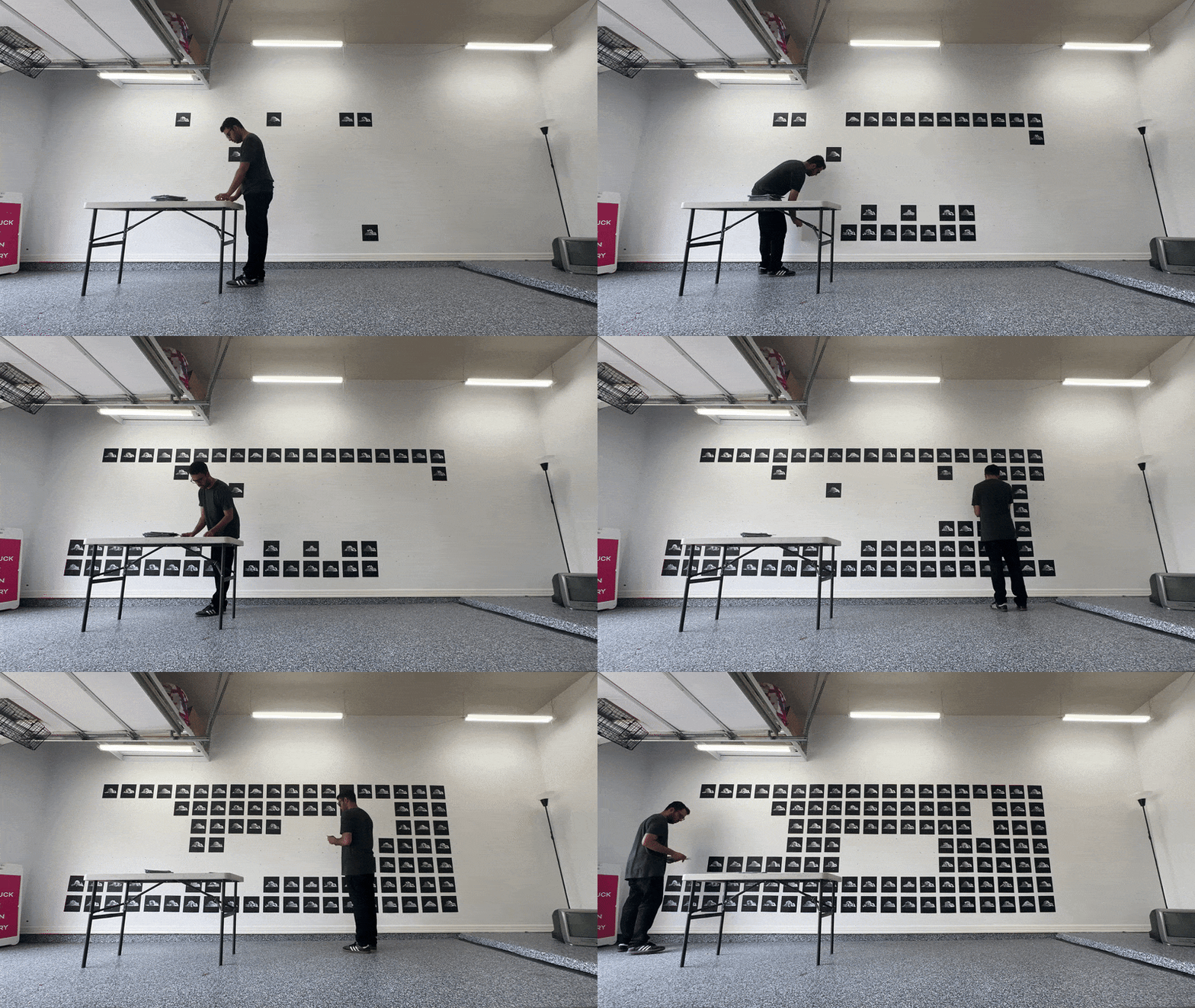


Visitors at the exhibit often observed the wall for long periods. Some described megh to be uncovering fragments of their memories, while a few confided intimate personal stories. Each viewer’s interpretation for this work is equally valid, for which megh was always meant to embody a shared experience of reflection.
Process : Using AI as a tool of expression.
A photoreal volumetric cloud was first constructed in Blender, rendered in a continuous 360° rotation. This base cloud was then processed through a custom Stable Diffusion AI workflow trained on my previous work alongside datasets of nature, history, public images and human interaction.
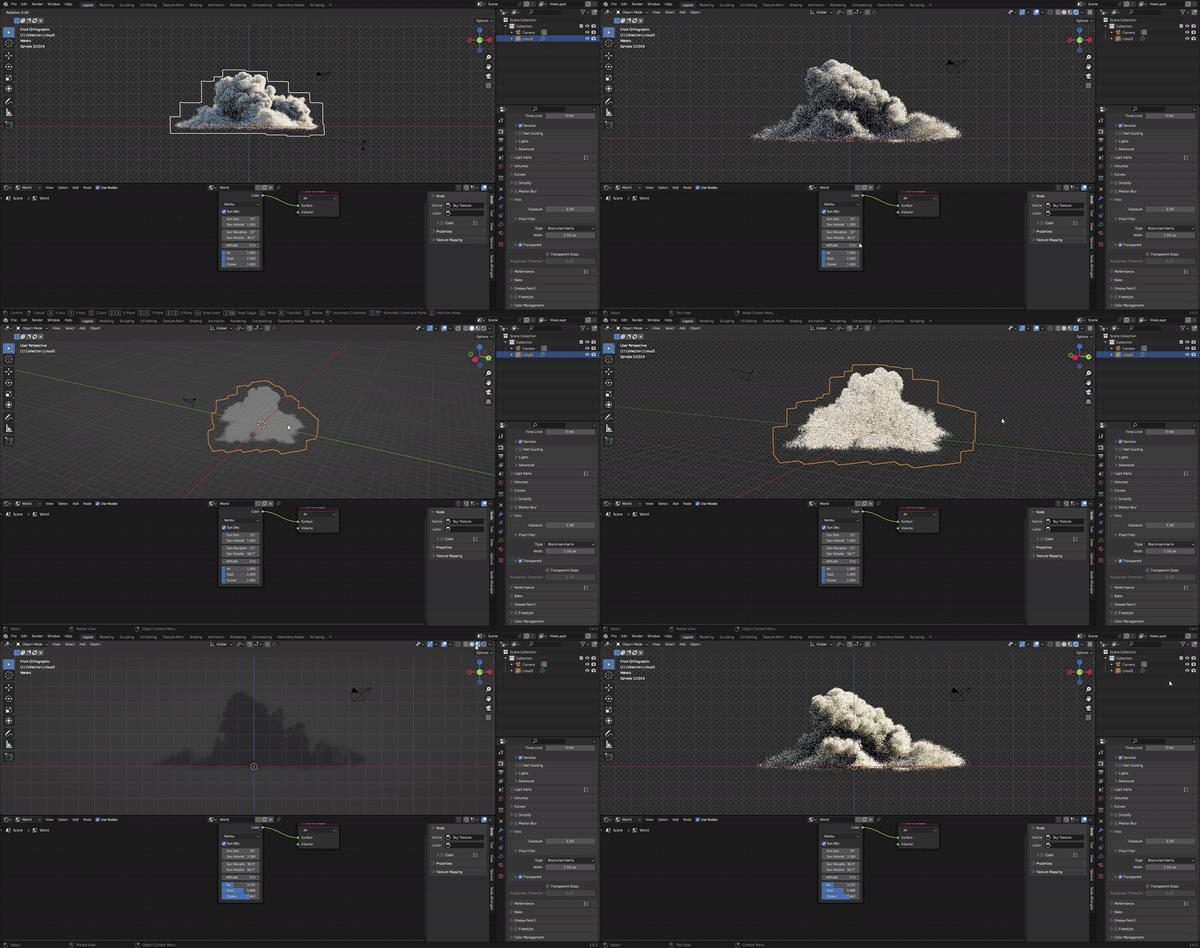
The system imposed unpredictable forms onto the model, producing more than 3,000 variations of clouds that suggested landscapes, bodies, ruins, and fleeting fragments of memory. It allowed for an open reinterpretation of the Megh. From the set of 3000, 160 variations was later handpicked to be presented as part of the final work.
While creating this work I often asked myself if the thousands of these outputs in various forms each considered separate works, or just one evolving image? I lean toward seeing Megh as one single piece of work. Though I recognize that both my personal and global context of AI-generated artwork are yet to find definitive ground.
In navigating the role of AI in art, I currently [Dec 2025] see it as an extension of the digital toolkit that amplifies the artistic process. In the case of Megh, developing the model required active interventions and attentive tuning that produced randomness in a carefully curated manner. When used with intention, AI can help the human produce representations that can touch new depths meaning.


